Hello, world. Hello, Tashkent.
4 мин чтения
OY Lab is live. A note on the night we switched it on, why a research lab in Tashkent matters, and what we owe the eighty million people around us.
Пока эта запись доступна только на английском.
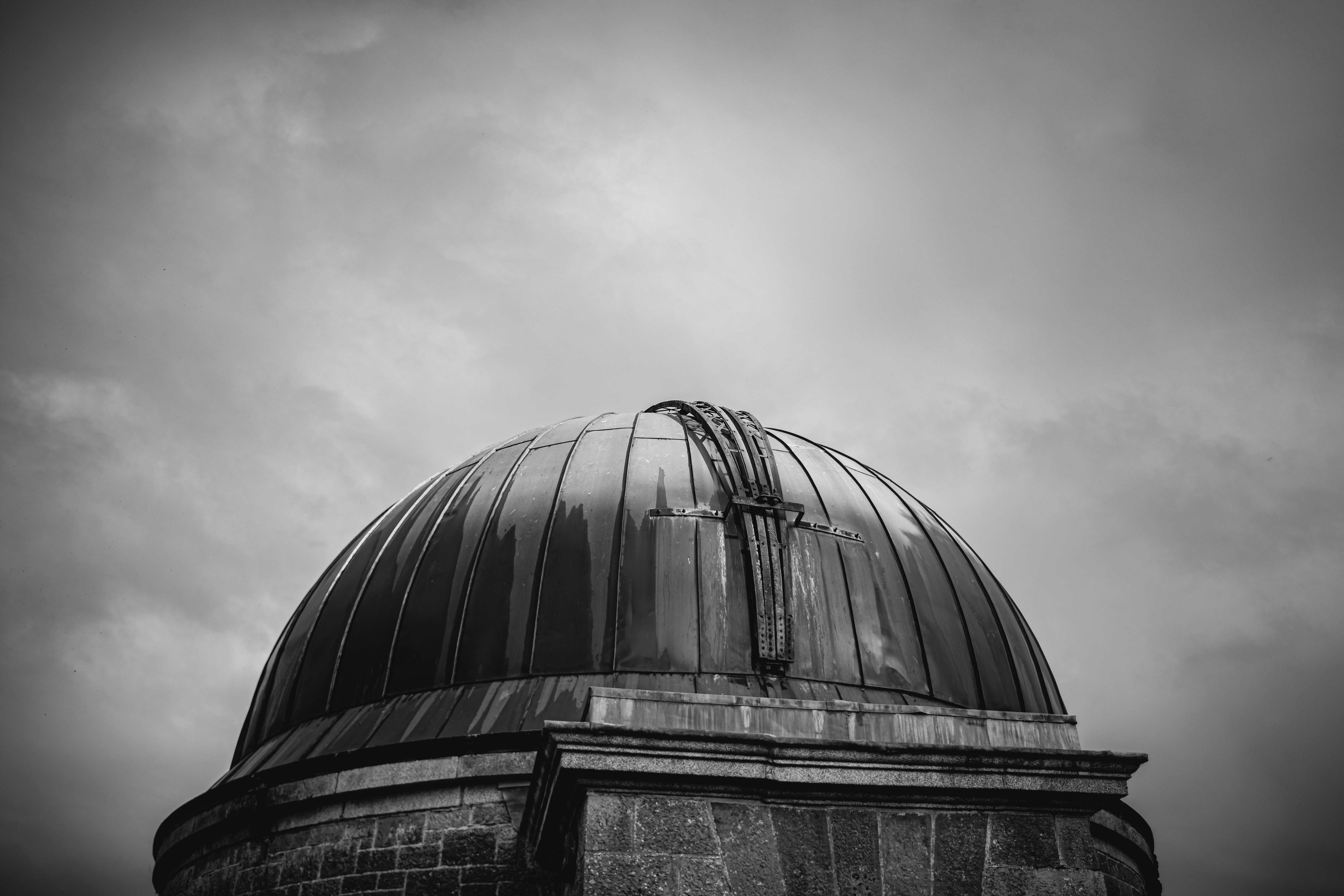
It is late in Tashkent. A few minutes ago this page did not exist. Now it does, and we have refreshed it more times than we would like to admit, the way you check on something newborn just to make sure it is still breathing.
So, hello. This is the first entry in the OY Lab journal.
What we built tonight, and what we actually built
On paper, tonight was small: a domain, a certificate, a few pages in three languages. Nobody in the world needed this website to exist. The sky over Tashkent looks exactly the same as it did yesterday.
But that is not what it felt like.
It felt like putting a chair down in a room where everyone assumed there was no room. For years the map of frontier computing has had a few bright cities and a lot of dark space, and Central Asia has been dark space. Not because people here are less curious or less able. Because nobody was waiting for us, and when nobody is waiting for you, it is easy to decide not to show up.
We decided to show up.
Why "Oy"
Oy means moon in Uzbek. We chose it because the moon is honest. It does not pretend to be full when it is a sliver. It goes dark every month, completely, and then it begins again without apology. Research is like that. Most of it is the dark part: the failed run, the result that does not replicate, the week you spend learning you were wrong. We wanted a name that would let us say "we are in the dark phase right now" without shame, and "we are full tonight" without boasting.
Every project at the lab is tracked by its phase, and we will tell you which phase it is in. That is a promise about honesty before it is a promise about results.
What we are going to do
We are a frontier research lab in computing and science. Four things, small enough to own and large enough to matter:
- Open models for our languages. Uzbek, Karakalpak and their neighbours deserve models that understand them, built by people who speak them. We will release the weights and the data, not just the paper.
- Scientific computing for problems that are ours. Water in the Aral basin. Soil in the Fergana valley. Heat and energy in cities that are growing faster than their grids. Numerical methods and learned surrogates, pointed at the ground beneath our feet.
- Systems that run on the hardware we actually have. Not the hardware in a press release. Quantization, scheduling, memory-aware kernels: the unglamorous work that turns a borrowed GPU into a research program.
- Applied work with the people who run things. Farmers, clinics, utilities. Deployed, measured, revised. If it does not change a real decision, it does not count.
How this changes the world
We are not going to pretend that a small lab in Tashkent changes the world by itself. Here is what we do believe, and it is harder and slower than a slogan.
A region of eighty million people should not only consume the frontier of computing. It should help define it. Every student here who learns to train a model instead of merely prompting one is a vote for that future. Every open dataset in Uzbek is a door that stays open for the next person. Every paper with a Tashkent affiliation on the first page quietly redraws the map for whoever reads it next.
The world changes when the set of people allowed to change it gets bigger. That is the whole plan. We are just going to work on it every day until it is true.
If you are reading this on a phone somewhere far from a GPU
Maybe you are in Nukus, or Samarkand, or a dormitory in Andijan, reading this on a cracked screen at one in the morning because you could not sleep. Maybe you have taught yourself more than your university ever did and you are tired of being told that the serious work happens somewhere else.
You are who we built this for. We hire slowly and for the long run, but we read everything, and we answer. When you are ready, write to us.
Tonight
The moon over Tashkent is a thin waning crescent. In a few days it will go dark, and then it will begin again.
That is the phase we are in: just before the beginning.
Welcome to OY Lab.
Tashkent, 4 November 2026